1945
Pay It No Mind
Marsha P. Johnson is born, and spends her life housing the people nobody else would
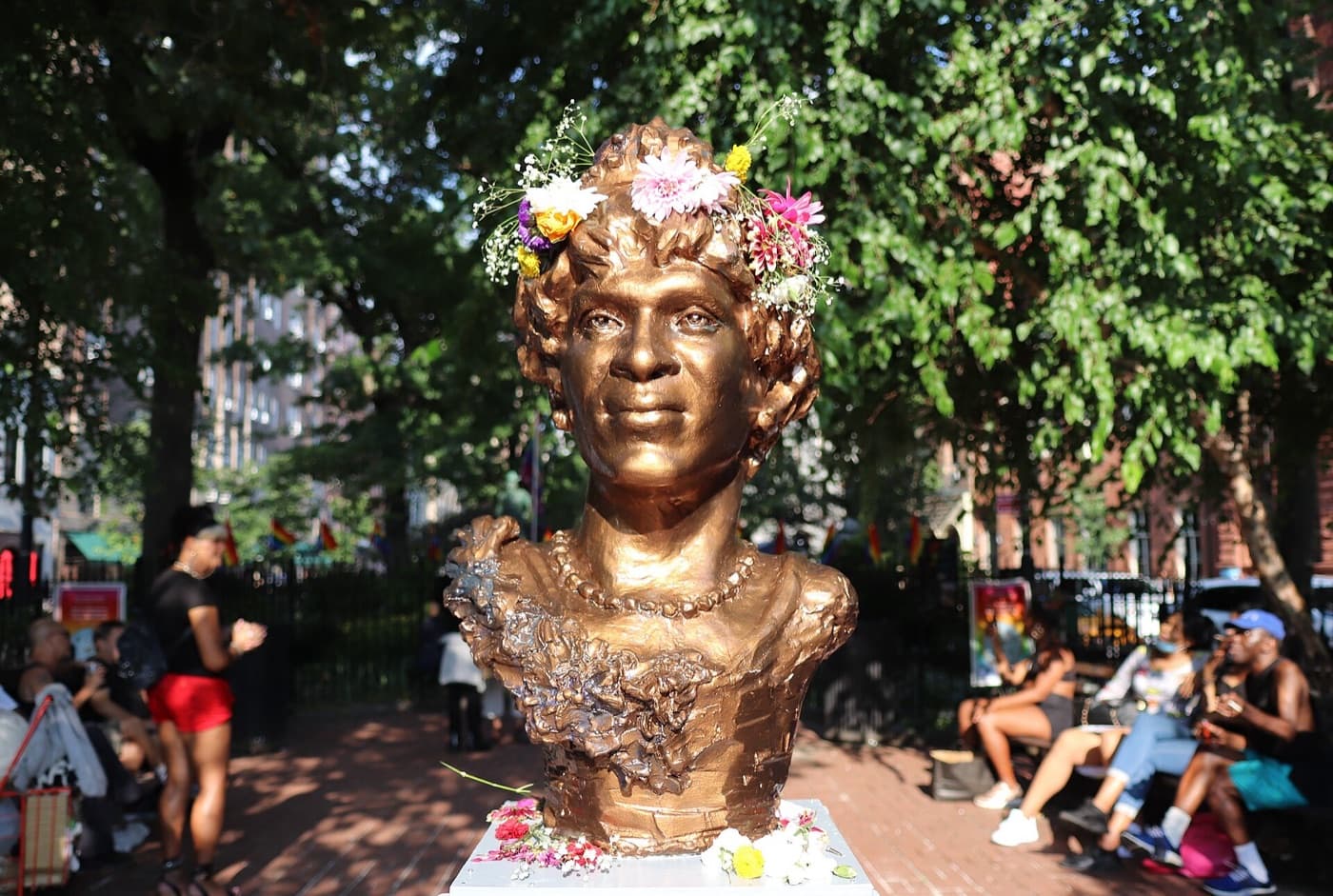
Marsha P. Johnson is on murals and T-shirts now, and her home town of Elizabeth, New Jersey is building a monument to her. For almost all of her actual life she was poor, often homeless, and giving away what little she had to other people who were worse off.
She was born in Elizabeth, New Jersey on August 24, 1945. She put on girls’ clothing for the first time when she was five. She joined the Navy after high school and left it after defending herself against a sexual assault, and in 1963 she moved to Manhattan with fifteen dollars and a bag of clothes.
She lived around 42nd Street, waiting tables at a Childs restaurant and making up the rest of her money by begging and doing sex work. People knew her on sight, because she dressed to be known: plastic fruit, and crowns she built out of flowers thrown away by the wholesale flower market. When anyone asked what the P in her name stood for, she said pay it no mind. It was also what she said to anyone who asked whether she was a man or a woman.
In June 1969 the police raided the Stonewall Inn, a gay bar in Greenwich Village, and the people inside fought back for several nights running. It is the event the modern gay rights movement counts as its beginning. Johnson is often said to have thrown the first brick. Historians argue about where she actually was, and she said herself that she arrived at about two in the morning, after it had already started.
What she did afterwards is not in dispute.
In 1970 she and Sylvia Rivera set up an organisation called Street Transvestite Action Revolutionaries, or STAR. Rivera was a friend who had been living on the street since childhood. Transvestite was the word people used then; both of them would be called trans women now. In November that year the two of them rented a building at 213 East 2nd Street and turned it into STAR House, a shelter for young drag queens and trans kids whose families had thrown them out. Fifteen to twenty-five of them lived there at any one time. Johnson and Rivera called themselves the house mothers, and they went out and did sex work to cover the rent so that the children staying there would not have to.
In 1975 Andy Warhol paid her fifty dollars to sit for a set of portraits called Ladies and Gentlemen, for which he photographed drag queens and trans women he found in New York bars.
From 1984 she was nursing people dying of AIDS, at a time when many hospitals did not want them. She helped organise the first AIDS Walk in Los Angeles in 1985. She marched with ACT UP, the protest group that spent the late eighties forcing the American government to take the epidemic seriously. She found out she was HIV positive around 1990.
She disappeared on July 2, 1992. Her body was found in the Hudson River four days later. The police recorded it as suicide and closed the case. In 2012 her niece, Mariah Lopez, got them to reopen it, and the cause of death was changed to undetermined. That is still where it stands.